

What to Look For in a Toddler Daycare: The Ultimate Checklist for Parents
The decision to find care for your little one is filled with a whirlwind of emotions. There’s the excitement for their new adventures, but it’s often shadowed by a wave of anxiety. How can you be sure they’ll be safe, loved, and truly happy when you’re not there? Choosing the right toddler daycare isn’t just about logistics; it’s about discovering a nurturing environment that becomes a partner in their holistic development. It’s about finding a second home where they can thrive, build confidence, and feel cherished, giving you complete peace of mind.
We understand the weight of this decision, and we’re here to transform your uncertainty into clarity. This guide is designed to empower you with the ultimate, actionable checklist. We’ll walk you through every critical factor to consider, from safety protocols and enriching programs to the warmth of teacher-child interactions. With this framework, you can confidently evaluate your options and select an exceptional program that not only supports your child’s cognitive and social growth but also aligns perfectly with your family’s values.
The Non-Negotiables: Safety, Licensing, and Environment
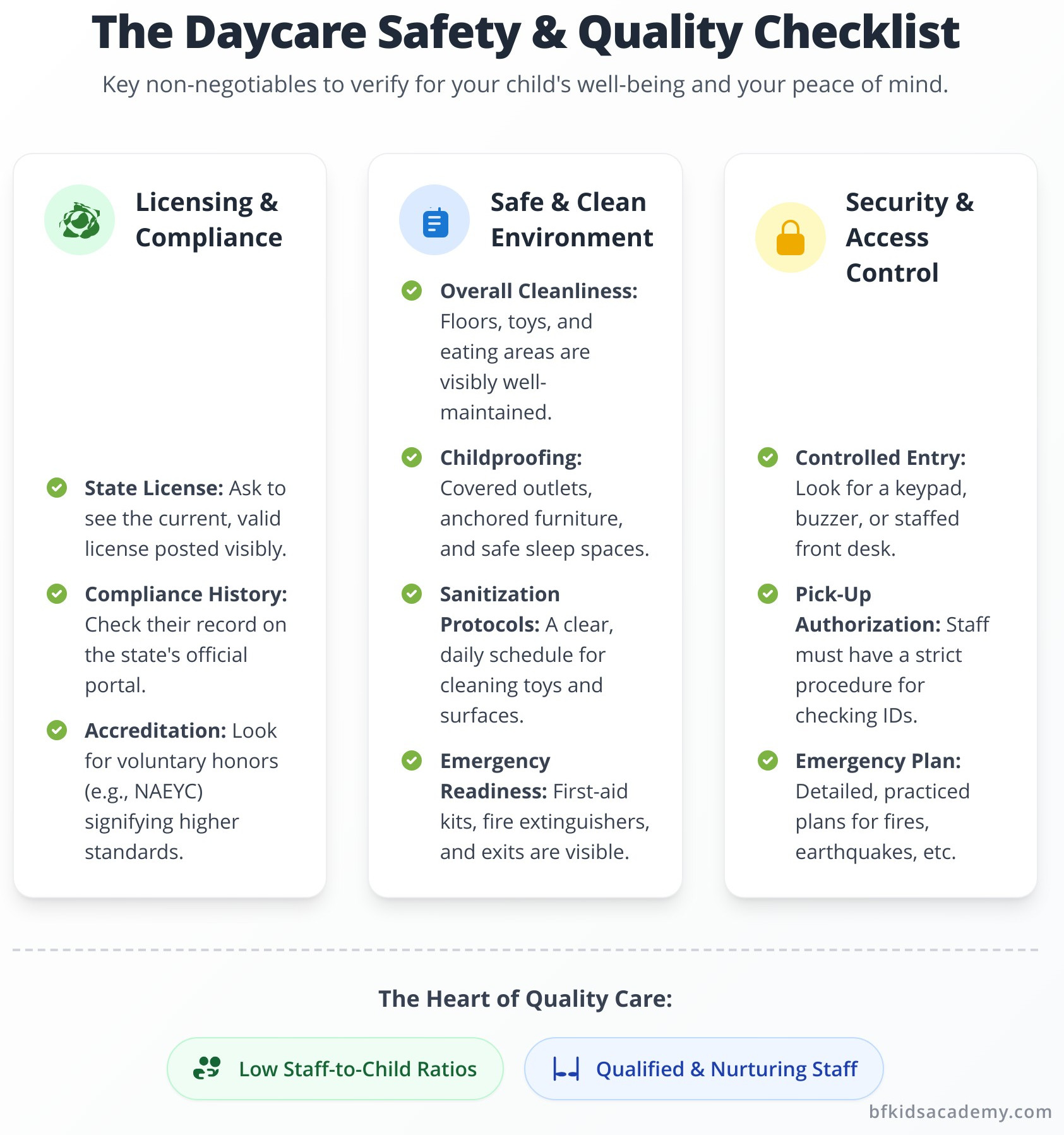
When you begin the search for the perfect toddler daycare, it’s easy to get excited about enriching programs and learning philosophies. However, before diving into those details, the most critical step is to verify the non-negotiables: the foundational elements that guarantee your child’s safety and well-being. A clean, secure, and properly licensed facility is the bedrock of exceptional care, providing the peace of mind every parent deserves. Here’s what to look for and ask about during your tour.
Licensing and Accreditation
A state license is the first and most important credential to verify. In California, every licensed child care center must meet specific health and safety standards. Always ask to see their current license and take the time to look up their compliance history online through the state’s official portal. Understanding the different types of care settings and their regulatory requirements is a crucial first step; for a comprehensive overview of child care models, it’s helpful to review foundational resources. Additionally, inquire about voluntary accreditations, such as from the National Association for the Education of Young Children (NAEYC), which signify a commitment to even higher standards of excellence.
Classroom Safety and Cleanliness
During your tour, observe the environment with a keen eye. A dedicated and professional staff maintains a space that is not just tidy but meticulously cared for. Pay close attention to:
- Overall Cleanliness: Are the floors, toys, and eating areas visibly clean and well-maintained?
- Childproofing: Look for covered electrical outlets, furniture securely anchored to walls, and safe, separate sleep spaces for infants and toddlers.
- Sanitization Protocols: Ask about their schedule for cleaning and sanitizing toys, surfaces, and high-touch areas throughout the day.
- Emergency Readiness: Is a well-stocked first-aid kit easily accessible? Are fire extinguishers and emergency exit routes clearly marked?
Security and Access Policies
Your child’s security is paramount. A trustworthy toddler daycare program will have clear, non-negotiable policies in place to control who enters the building and interacts with the children. Be sure to ask about:
- Controlled Entry: How is the main entrance secured? Look for systems like a keypad entry, a buzzer system, or a front desk administrator.
- Pick-Up Authorization: What is the procedure for pick-up? Staff should always check IDs for anyone they don’t recognize, even if they are on the authorized list.
- Emergency Preparedness: Does the center have a detailed plan for emergencies like fires or earthquakes? Ask how they practice these drills with the children.
The Heart of the Program: Caregivers and Staff
A beautiful facility and a robust curriculum are important, but the true quality of a toddler daycare is defined by the people who will care for and guide your child every day. These educators are more than supervisors; they are your child’s first mentors outside the home. Their warmth, patience, and professional expertise create the safe, nurturing environment where your toddler can truly thrive.
Qualifications and Staff Turnover
A dedicated and stable teaching team is a strong indicator of a well-run program. When you tour, ask about the educational qualifications for lead and assistant teachers, such as degrees in early childhood education. Ensure that all staff maintain current CPR and First-Aid certifications. Don’t hesitate to also inquire about staff tenure; high turnover can be a red flag, while a team of long-term, passionate educators suggests a positive and supportive workplace-which translates directly to happier, more engaged children.
Staff-to-Child Ratios
Toddlers require significant one-on-one attention for their social and emotional development, making a low staff-to-child ratio non-negotiable. While California has minimum licensing requirements, the best programs often maintain even better ratios to ensure each child receives the individual support they need. The National Association for the Education of Young Children (NAEYC) identifies strong teacher-child relationships, supported by low ratios, as a key component of high-quality toddler programs because it allows for more meaningful interactions and personalized care throughout the day.
Teacher-Child Interactions
During your visit, pay close attention to the interactions happening in the classroom. The best caregivers are active participants in the children’s world. Look for these positive signs:
- Teachers are on the floor, engaging with children at their eye level.
- Their tone of voice is warm, respectful, and encouraging, even during redirection.
- They actively listen to the children and respond to their needs with patience and empathy.
- The children appear happy, comfortable, and secure in their relationships with the staff.
These small moments of connection are the foundation of your child’s daily experience and a key part of their holistic development. We believe our educators are our greatest asset. Meet the dedicated, experienced teachers at Bright Future Kids Academy.
A Day in the Life: Curriculum and Daily Routine
For toddlers, the world is a vast and exciting place. A predictable daily routine provides the security and structure they need to explore it with confidence. A high-quality toddler daycare program is built on a thoughtful rhythm that balances energetic play with quiet learning, social interaction, and restorative rest. This daily flow is where a center’s educational philosophy truly comes to life, empowering your child to thrive each day.
Learning Philosophy and Approach
Understanding a center’s educational approach is key to finding the right fit. Is their curriculum primarily play-based, focused on academic readiness, or a blend of both? A quality program will have a clear strategy for nurturing not just cognitive skills, but also crucial social-emotional ones. Ask how they guide toddlers in learning to share, take turns, and express their feelings. Look for enriching programs, like bilingual education, that can broaden a child’s cultural appreciation and cognitive flexibility from an early age.
The Daily Schedule
A center’s philosophy is put into practice through its daily schedule. Don’t hesitate to ask for a copy of the toddler classroom’s typical day. A well-designed schedule is a sign of a professional and organized program; in fact, reviewing the daily plan is a key recommendation in helpful resources like the Georgia Department of Early Care and Learning’s Child Care Checklist. Look for a healthy balance that includes dedicated time for:
- Plenty of outdoor play and physical activity to develop gross motor skills.
- A consistent and restful naptime in a calm, soothing environment.
- Group activities and free-choice play to encourage both collaboration and independence.
The best programs get creative with their outdoor time. For inspiration on the types of activities a well-equipped center might offer, resources from daycare outfitters like Kigata provide a look into seasonal and engaging play ideas.
Developmental Activities
A great daily schedule is filled with intentional, age-appropriate activities that support holistic development. The learning materials and planned experiences should be designed to stimulate curiosity and growth. Inquire about the specific activities used to support key developmental milestones. A truly enriching environment will offer a variety of opportunities for:
- Fine and Gross Motor Skills: From stacking blocks and working with puzzles to dancing and climbing.
- Language and Cognitive Growth: Fostered through engaging story times, singing songs, and simple counting games.
- Sensory and Creative Exploration: Opportunities for messy art, playing with sensory tables (using water, sand, etc.), and making music.
The Parent Partnership: Communication and Policies
Beyond the curriculum and facilities, the foundation of an exceptional toddler daycare experience is the relationship between the provider and your family. You are your child’s first and most important teacher, and you should feel like a valued partner in their daily care and holistic development. Open, consistent communication builds the trust necessary for your child to thrive in a new environment, ensuring that their journey is supported by a unified team at home and at school.
Daily Updates and Communication
Staying connected to your child’s day is essential for your peace of mind. A quality program will have a clear and reliable system for sharing updates. When you tour a facility, ask how they keep parents informed. Do they use a mobile app for real-time photos and updates on naps, meals, and diaper changes? Do they provide a written daily sheet at pickup, or do teachers offer a verbal report? Also, clarify how accessible staff are. You should feel confident that you can easily reach a teacher or the director with a question or concern.
Discipline and Behavior Guidance
Toddlers are learning to manage big emotions, and a center’s approach to behavior guidance is critical. Their philosophy should be positive, proactive, and focused on teaching, not punishment. Inquire about their specific strategies for handling common toddler challenges like tantrums, sharing difficulties, or biting. The best programs use techniques like redirection, positive reinforcement, and helping children name their feelings to build self-regulation skills. This approach empowers children and helps them develop confidence and empathy.
Parent Involvement and Community
A welcoming atmosphere for parents is a hallmark of an exceptional toddler daycare. Ask about their policies on parent involvement. A truly collaborative program will offer:
- An open-door policy for parents to visit (while respecting classroom routines).
- Scheduled parent-teacher conferences to discuss your child’s progress and goals.
- Family events, like holiday parties or cultural celebrations, that build a strong sense of community.
When families feel connected to the center, children feel a greater sense of security and belonging. At Bright Future Kids Academy, we believe this partnership is the cornerstone of shaping the future with care.
The Practical Details: Health, Nutrition, and Logistics
Beyond the curriculum and philosophy, the day-to-day practicalities of a toddler daycare program can significantly impact your family’s routine and your child’s well-being. A center that is organized, transparent, and thoughtful about these details demonstrates a deep commitment to creating a safe, nurturing, and reliable environment where children can truly thrive.
Health and Sick Policies
A clear and consistently enforced sick policy is one of the most critical indicators of a high-quality center. It shows a dedication to protecting the health of every child. When you tour, ask for specific details about their health protocols.
- When to Stay Home: What are the specific symptoms (e.g., fever, vomiting, rash) that require a child to stay home, and for how long?
- Communication: How does the center notify parents about communicable illness outbreaks, such as hand, foot, and mouth disease?
- Medication: If your child needs medication during the day, what is the procedure for storage and administration?
Meals and Nutrition
Proper nutrition is the fuel for cognitive development, physical energy, and a strong immune system. Understanding a daycare’s approach to food is essential for your child’s holistic growth. Inquire about their meal program to ensure it aligns with your family’s values.
- Food Source: Does the center provide all meals and snacks, or are parents expected to pack them?
- Menu Quality: Ask to see a sample weekly menu. Look for a variety of healthy, balanced options that include whole grains, fresh fruits, and vegetables.
- Allergy Management: How do they manage food allergies and dietary restrictions to ensure every child’s safety?
Potty Training, Supplies, and Hours
The final logistical pieces ensure that the partnership between you and the daycare is smooth and predictable. A great toddler daycare will work with you as a team, especially during major milestones like potty training. Be sure to confirm the following:
- Potty Training: What is their approach to potty training, and how do they partner with parents to ensure consistency?
- Supplies: What items, such as diapers, wipes, and extra clothes, do parents need to provide?
- Hours of Operation: Confirm their daily hours, drop-off and pickup windows, and their calendar for holiday and seasonal closures.
At Bright Future Kids Academy, we believe that exceptional care extends to every detail of your child’s day. Learn about our commitment to organic meals and schedule a tour today!
Finding the Right Partner for Your Toddler’s Bright Future
Choosing the right toddler daycare is one of the most significant decisions a parent can make. Your research has empowered you to look beyond the surface, focusing on the non-negotiables that truly matter. A licensed, safe environment provides peace of mind, while dedicated, nurturing caregivers create the warm atmosphere where children feel secure enough to explore. Finally, a thoughtfully designed curriculum ensures their day is filled with purposeful play and enriching activities that support their holistic development.
At Bright Future Kids Academy, we are dedicated to embodying these principles every day. As a licensed, family-owned center, we’ve built a community founded on trust and care. We go further by offering a unique trilingual program in English, Armenian, and Russian, opening young minds to new cultures. To nourish their growing bodies, we provide delicious, fresh, and organic meals and snacks daily.
We invite you to see our commitment to empowering young minds for yourself. Ready to see a nurturing, high-quality toddler program in action? Schedule your tour of Bright Future Kids Academy today! You’ve done the hard work, and you’re ready to find the perfect partner in your child’s early education journey.
Frequently Asked Questions About Toddler Daycare
How can I help my toddler with separation anxiety when starting daycare?
Helping your toddler adjust requires patience and a consistent routine. We recommend creating a short, positive goodbye ritual, like a special hug and a cheerful “see you later.” Talk enthusiastically about the fun activities and friends awaiting them. It can also be very reassuring for them to bring a familiar comfort item, such as a favorite blanket or stuffed animal, to help them feel secure in their new, nurturing environment as they build confidence and trust.
What is the average cost of toddler daycare in the Granada Hills area?
The cost of full-time toddler care in Granada Hills and the surrounding San Fernando Valley typically ranges from $1,200 to over $2,000 per month. This price can vary based on several factors, including the center’s specific programs, staff-to-child ratios, facility amenities, and whether meals are included. We recommend scheduling a tour to receive detailed tuition information and understand the exceptional value a high-quality program provides for your child’s holistic development. For families whose search for the right community also includes finding a new home, you can visit Ray Lyon Realty for expert guidance on the Westside of Los Angeles.
My toddler isn’t potty trained. Will a daycare center still accept them?
Absolutely. Most professional toddler daycare programs understand that potty training is a developmental journey that happens at a different pace for every child. Reputable centers do not require toddlers to be potty trained for enrollment. Our dedicated educators are experienced in supporting this milestone and will partner with you to create a consistent and encouraging plan, ensuring your child feels comfortable and confident as they learn this important new skill.
Is it normal for kids to get sick more often when they start daycare?
Yes, it is very common for children to experience more frequent colds and minor illnesses when they first start daycare. This exposure is a normal part of building a strong and resilient immune system. Licensed, high-quality centers work diligently to minimize the spread of germs by following strict sanitation protocols, promoting frequent handwashing, and maintaining a clean and healthy environment to ensure all children can thrive safely.
What should I pack in my toddler’s bag for their first day of daycare?
For a successful first day, we suggest packing a bag with all the essentials. This should include a full change of clothes (shirt, pants, socks, underwear), diapers or pull-ups, and wipes if needed. Also, pack a labeled water bottle, any necessary medications with clear instructions, and a special comfort item like a small blanket or stuffed animal. This preparation helps ensure your child has everything they need for a comfortable and secure day of learning and play.
How do I know if a play-based or more academic program is right for my toddler?
A play-based curriculum empowers toddlers to learn through exploration, creativity, and social interaction, which is excellent for building foundational skills. A more academic program introduces structured concepts like letters and numbers earlier. For toddlers, the most enriching programs often blend both approaches. This balanced philosophy supports holistic development, nurturing your child’s natural curiosity while gently preparing them for future academic growth in a supportive, engaging environment.