

A Parent’s Guide to Developing Social Skills for Preschoolers
If you’ve ever felt a pang of worry watching your child hesitate to join in on the playground, or found yourself refereeing another squabble over a shared toy, you are not alone. As a parent, you want nothing more than to see your child build happy friendships and walk into kindergarten with confidence. Developing positive social skills for preschoolers is the essential foundation for this success, shaping how they learn, cooperate, and navigate their world with kindness and empathy.
This guide is designed to empower you on this important journey. We will explore the essential social milestones your child needs to thrive in school and beyond, providing a toolbox of simple, fun activities to nurture their emotional intelligence right at home. You will discover how to transform challenges like sharing and managing big feelings into valuable learning moments. Let’s build the confidence both you and your child need, ensuring they are not just prepared for the classroom, but are ready to build a brighter, more connected future.
Why Social Skills Are the Foundation for a Bright Future
As we prepare our children for kindergarten, we often focus on academic milestones like recognizing letters and numbers. While important, the true bedrock of school readiness and future success lies in their social competence. These abilities go far beyond simply “sharing toys” or “being nice.” The development of strong social skills for preschoolers is about empowering them with the tools to navigate their world with confidence and kindness.
These crucial skills are not innate; they are learned and nurtured through dedicated guidance and practice. When we talk about social development, we are referring to a rich set of learned behaviors that allow us to interact effectively with others. But what are social skills? In essence, they are the rules and customs that govern social situations, enabling children to build positive relationships, communicate their needs, and solve problems collaboratively. By fostering these skills, we are shaping a future where our children can thrive, not just academically, but personally.
The Link Between Social Skills and School Success
A child’s ability to interact positively with teachers and peers is directly tied to their academic growth. In a bustling kindergarten classroom, social skills are the engine of learning. A child who can listen attentively, follow multi-step directions, and cooperate with others is set up to absorb new information and participate fully in all activities. These foundational skills allow them to:
- Listen actively when a teacher is giving a lesson.
- Follow directions during classroom routines and transitions.
- Cooperate with peers during group projects and playtime.
- Ask for help respectfully when they feel confused or overwhelmed.
Building Emotional Intelligence (EQ) from an Early Age
Emotional Intelligence (EQ) is a cornerstone of social skill development. Simply put, it’s the ability to understand and manage one’s own feelings, and to recognize and influence the emotions of others. A child with growing EQ can identify if a friend is sad and offer comfort, building empathy. They also learn to manage their own big feelings-like frustration or disappointment-in healthy ways, which prevents classroom disruptions and helps them build resilience. This holistic development is essential for creating a happy, well-adjusted learner.
The 5 Core Social Skills Every Preschooler Should Learn
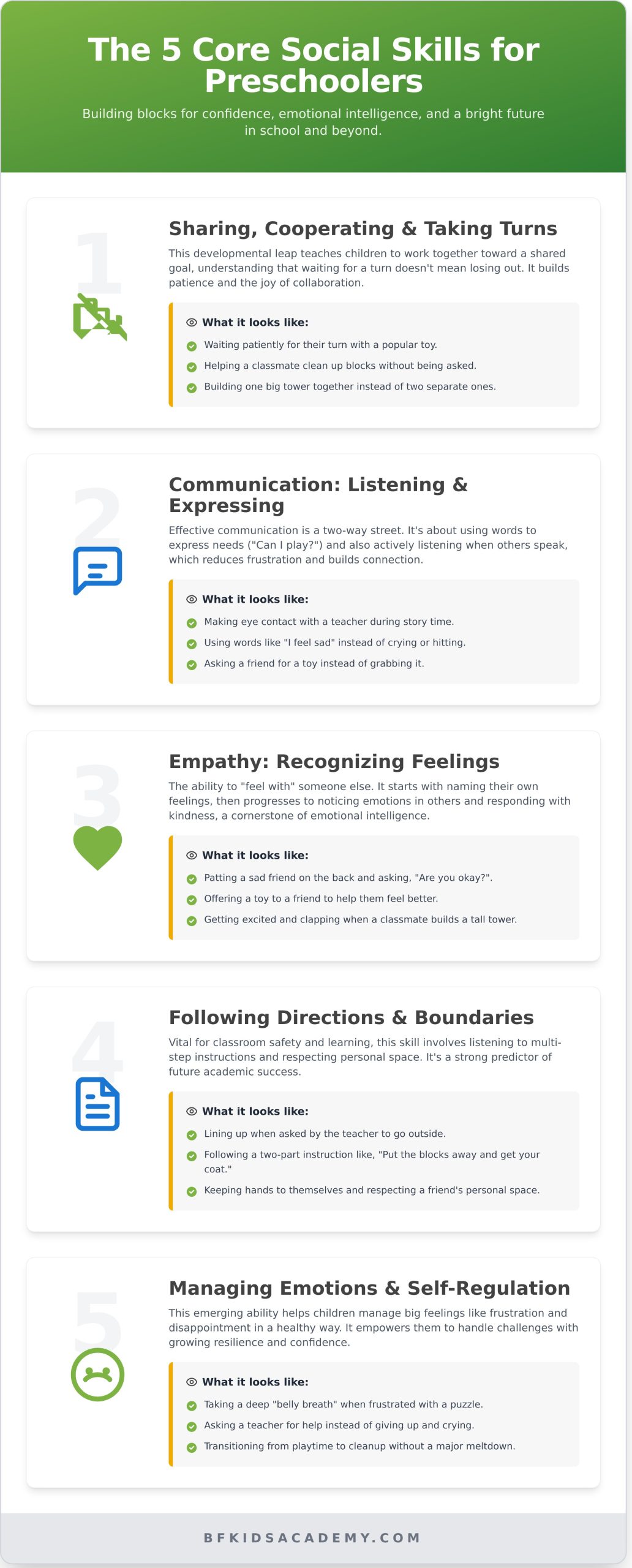
Think of social skills as the essential building blocks for your child’s future success and happiness. Mastering these abilities empowers them to build friendships, thrive in a classroom setting, and navigate the world with confidence. As you guide your child, remember that this is a journey, not a race; every child develops these crucial skills at their own pace. Focusing on these five core areas will provide a strong foundation for their holistic development and help them prepare for a brighter tomorrow.
1. Sharing, Cooperating, and Taking Turns
For a preschooler, the world often revolves around “me” and “mine.” Learning to share is a significant developmental leap. It’s about understanding that waiting for a turn on the slide or passing the blue crayon to a friend doesn’t mean losing it forever. Cooperation takes this a step further, teaching children to work together-like building one big tower instead of two small ones-toward a shared, joyful goal.
What it looks like: A child waiting patiently for their turn with a toy, helping a classmate clean up blocks, or passing a snack bowl to a friend.
2. Communication: Listening and Expressing Themselves
Effective communication is a two-way street. It involves not only using words to express needs and feelings (“Can I have a turn, please?”) but also learning to listen when others speak. We encourage children to make eye contact and wait for a pause before talking. This skill is fundamental among all social skills for preschoolers, as it reduces frustration and helps them connect meaningfully with peers and teachers.
What it looks like: A child looking at the teacher during story time, using words like “I feel sad” instead of crying, or asking a friend for a toy instead of grabbing it.
3. Empathy: Recognizing and Responding to Feelings
Empathy is the ability to “feel with” someone else-to recognize their emotions and respond with care. This begins with helping your child name their own feelings (“You seem frustrated with that puzzle”). Soon, they will start to notice those same feelings in others and offer comfort, like giving a hug to a crying friend or sharing a toy to make someone happy. This is a cornerstone of emotional intelligence.
What it looks like: A child patting a sad friend on the back, saying “Are you okay?”, or getting excited when a classmate accomplishes something new.
4. Following Directions and Respecting Boundaries
A child’s ability to follow simple, multi-step directions (“Please put your drawing in your cubby and wash your hands”) is vital for classroom safety and learning. This skill is directly linked to cognitive growth and self-control. As confirmed by extensive early childhood social skills research, these foundational abilities are strong predictors of future academic success. This area also includes understanding personal space and the importance of asking for permission before giving a hug or touching a friend’s belongings.
What it looks like: A child lining up when asked, keeping their hands to themselves, and following two-part instructions from a teacher.
5. Managing Emotions and Self-Regulation
Preschool is full of big emotions-excitement, disappointment, anger, and joy. Self-regulation is the emerging ability to manage these feelings in a healthy way. Instead of a tantrum, a child might learn to take a deep breath, find a quiet space to calm down, or use words to explain why they are upset. Nurturing this skill empowers children to handle challenges with growing resilience and confidence.
What it looks like: A child taking a deep “belly breath” when frustrated, asking for help instead of giving up, or transitioning from playtime to cleanup without a major meltdown.
Fun At-Home Activities to Nurture Social Growth
Transforming daily interactions into learning opportunities is a powerful way to support your child’s holistic development. These simple, playful activities are designed to be joyful family moments, not chores. By using everyday items and a gentle, no-pressure approach, you can create an enriching environment that naturally builds essential social skills for preschoolers, empowering them with the confidence they need to thrive.
Games for Sharing and Cooperation
These activities teach children the joy of working together, building patience and respect for others along the way.
- Tower Teamwork: Take turns placing blocks to build the tallest tower you can together.
- Simple Board Games: Play games that focus on following rules, waiting for your turn, and handling small wins and losses with grace.
- Kitchen Crew: Cook a simple recipe where everyone has a small job, showing how collaboration creates a delicious reward.
Activities for Emotional Literacy
Understanding and naming feelings is a key part of cognitive development that builds empathy and communication skills.
- Storytime Feelings: While reading a book, pause and ask, “How do you think that character feels right now?”
- Emotion Charades: Take turns making happy, sad, or surprised faces for others to guess.
- Create a Feelings Wheel: Draw a circle with different facial expressions your child can point to when they can’t find the words.
Practice for Listening and Following Directions
Strong listening skills are crucial for classroom success. These games help your child practice tuning in to instructions, which fosters independence.
- Play Simon Says: This classic game is a perfect and playful way to encourage careful listening.
- Give Two-Step Tasks: Use simple, two-part instructions like, “Please get your cup and put it on the table.”
- Go on a Listening Walk: Sit quietly outdoors and take turns identifying all the different sounds you can hear.
Remember, the goal is connection, not perfection. Celebrating effort over outcome will make learning these crucial social skills for preschoolers a positive and empowering experience. These at-home practices create a wonderful foundation that we build upon in our structured, nurturing environment at Bright Future Kids Academy. To see how we integrate social-emotional learning into our daily curriculum, we invite you to learn more about our enriching programs.
How Preschool Supercharges Social Skill Development
While parents provide a loving and essential foundation at home, a high-quality preschool offers a unique, dynamic environment specifically designed to foster the social skills for preschoolers. This structured setting acts as the perfect bridge between the comfort of home and the bustling social world of kindergarten, empowering your child to step into their next chapter with confidence and compassion.
The Power of Learning with Peers
At home, social interactions are often with siblings or during planned playdates. A preschool classroom, however, is a vibrant community where children constantly navigate social situations. Every day presents countless organic opportunities to practice sharing art supplies, taking turns on the slide, and negotiating the rules of a game. They learn invaluable social cues not just from instruction, but by observing how their friends resolve conflicts, express kindness, and work together.
Guided Learning from Experienced Educators
This peer-to-peer learning is gently guided by dedicated educators who are trained to support holistic development. They don’t just supervise play; they actively shape a positive and respectful social environment. In a professional preschool setting, teachers:
- Model positive language and demonstrate constructive ways to express feelings and resolve disagreements.
- Design structured activities that require teamwork, communication, and shared goals, turning play into powerful lessons in collaboration.
- Provide individualized support by identifying children who may need extra encouragement and offering tailored strategies to help them connect with others.
The Bilingual Advantage in Social Awareness
An exceptional program can elevate social learning even further through cultural and linguistic immersion. Learning multiple languages does more than just build a powerful brain; it builds a more empathetic heart. As children are exposed to different languages and cultural traditions, they develop greater cognitive flexibility and a deeper, more intuitive understanding that people have unique perspectives and ways of communicating. This foundation of empathy is a cornerstone of advanced social skills for preschoolers, preparing them to thrive in a multicultural world.
We believe in shaping the future with care by nurturing this global perspective from an early age. Learn about our nurturing trilingual program.
Empowering Your Child for a Socially Bright Future
Nurturing your child’s ability to share, listen, and cooperate is one of the most impactful gifts you can provide. As we’ve seen, these foundational skills are not just about making friends; they are the bedrock for future academic success and emotional well-being. By engaging in fun at-home activities and understanding the core milestones, you are already paving the way for a lifetime of positive relationships. The journey of developing strong social skills for preschoolers is a beautiful partnership between a loving home and a supportive learning environment.
At Bright Future Kids Academy, we are passionately dedicated to this holistic growth. As a licensed, family-owned center, our experienced educators specialize in kindergarten readiness within a uniquely nurturing, trilingual environment. We empower children to thrive socially and academically by building confidence and cultural appreciation in English, Armenian, and Russian. See how we shape the future with care.
Schedule a tour to see how we nurture holistic development!
Let’s work together to help your child connect, collaborate, and step confidently into their bright future.
Frequently Asked Questions
What are the most important social skills for a 4-year-old?
At this crucial age, key skills include listening without interrupting, following two-step directions, sharing toys, and taking turns. It is also vital for them to begin using words like “please” and “thank you” and expressing their feelings verbally instead of physically. Mastering these abilities empowers children, building the confidence they need to thrive in a classroom setting and form positive relationships with peers, which sets a strong foundation for their holistic development.
How can I teach my preschooler to share without forcing them?
Forcing a child to share can create negative feelings. Instead, model generous behavior in your own life and praise them enthusiastically when they share on their own. Use a timer to help them practice taking turns with a coveted toy, which provides a clear and fair structure. This approach helps them understand that sharing doesn’t mean losing something forever but is a kind way to play together, which is a cornerstone of strong social skills for preschoolers.
My child is very shy. How can I encourage them to make friends?
For a shy child, start with small, comfortable steps. Arrange one-on-one playdates in a familiar environment, like your home, where they feel secure. You can also role-play social scenarios, such as how to ask another child to play or join a game. Acknowledge and praise their brave efforts, no matter how small. This nurturing approach helps build their social confidence gradually, empowering them to connect with others at their own pace and on their own terms.
Is it normal for my preschooler to have imaginary friends?
Absolutely. Having an imaginary friend is a very common and healthy sign of a child’s developing creativity and cognitive skills. This form of imaginative play allows them to explore relationships, practice problem-solving, and manage emotions in a safe context. It is a wonderful tool for their holistic development, offering a way to rehearse conversations and social situations. Embrace this creative phase, as it is a positive milestone in their journey.
What should I do when my preschooler hits or grabs from another child?
When this happens, intervene calmly and immediately. First, separate the children to ensure safety. Then, get on your child’s level and state the rule clearly: “We use gentle hands. Hitting hurts.” Acknowledge their feeling (“I can see you were frustrated that she had the truck”) but reinforce that the action is not okay. Guide them toward a positive alternative, like using their words to ask for a turn, to help them build better coping strategies.
How do I know if my child is socially ready for kindergarten?
A socially ready child can typically separate from you with minimal distress, follow two- to three-step directions, and show interest in playing with other children. They should be able to communicate their basic needs and wants verbally and have some experience with sharing and taking turns. Developing these essential social skills for preschoolers is a key indicator that your child has the foundation needed to thrive and engage positively in the structured kindergarten environment.