

What Makes a Great After-School Care Program? A Parent’s Guide
The 3:00 PM bell doesn’t just signal the end of the school day; for many working parents, it marks the start of a daily challenge. How can you be sure your child is safe, engaged, and thriving while you finish your workday? The worry about unstructured screen time, missed homework, or simple boredom is a heavy weight to carry, making the gap between school and home feel vast and uncertain.
Finding the right afterschool care program is the key to bridging that gap with confidence. This decision is about more than just supervision; it’s about choosing a space that supports your child’s academic growth and holistic development. It’s about securing that invaluable peace of mind, knowing they are in a nurturing, reliable, and empowering environment where they can continue to flourish.
This guide is designed to empower you with the knowledge to make that choice. We’ll explore the essential elements of an exceptional program, from dedicated homework support and enriching activities to the safety protocols that protect your child. You’ll learn exactly what to look for, so you can select a second home that helps your child thrive long after the last bell rings.
Beyond the School Bell: Defining a Modern After-School Program
For working parents, the hours between 3 PM and 6 PM represent a daily challenge: ensuring their child is safe, happy, and engaged after the school day ends. In the past, this time was often filled with simple supervision. However, the role of modern after-school programs has evolved significantly, transforming these hours from idle time into a valuable opportunity for growth. The goal is no longer just to watch children, but to empower them.
An exceptional afterschool care program is built on a foundation of three essential pillars. It moves beyond basic care to provide a comprehensive experience that supports a child’s holistic development. When evaluating options, parents should look for a program that masterfully balances:
- Safety and Security: A nurturing, licensed environment where children feel protected and parents have peace of mind.
- Structured Enrichment: A dynamic curriculum that blends academic support, such as homework help, with creative, cultural, and physical activities.
- Social and Emotional Development: Guided opportunities for children to build confidence, develop friendships, and practice crucial collaboration skills.
It’s Not Just Babysitting
A key distinction of a high-quality program is the shift from passive supervision to active, planned engagement. Instead of simply watching kids, trained educators facilitate a structured daily schedule that encourages curiosity and learning. This curriculum-based approach ensures that every activity has a purpose, whether it’s a STEM project that builds critical thinking or a group game that teaches teamwork, helping children thrive long after the school bell rings.
Types of Programs Available
Parents today have several models to choose from, each offering unique benefits. Understanding these differences can help you find the best fit for your child’s needs and your family’s schedule.
- School-Run Programs: Located on campus, these offer unmatched convenience and a familiar environment for students.
- Community Organizations: Centers like the YMCA or Boys & Girls Clubs often have a strong focus on sports, recreation, and large-group socialization.
- Licensed Daycare Centers & Private Academies: These provide a professional, education-focused setting, often featuring smaller group sizes, dedicated educators, and specialized enriching programs.
For families with non-traditional schedules, such as those who travel for work or embrace “worldschooling,” online platforms offer another powerful option for continued learning. To see how an AI-powered platform can provide a personalized and enriching curriculum on the go, you can visit LearnSpark.
The Anatomy of a High-Quality Program: 4 Non-Negotiables
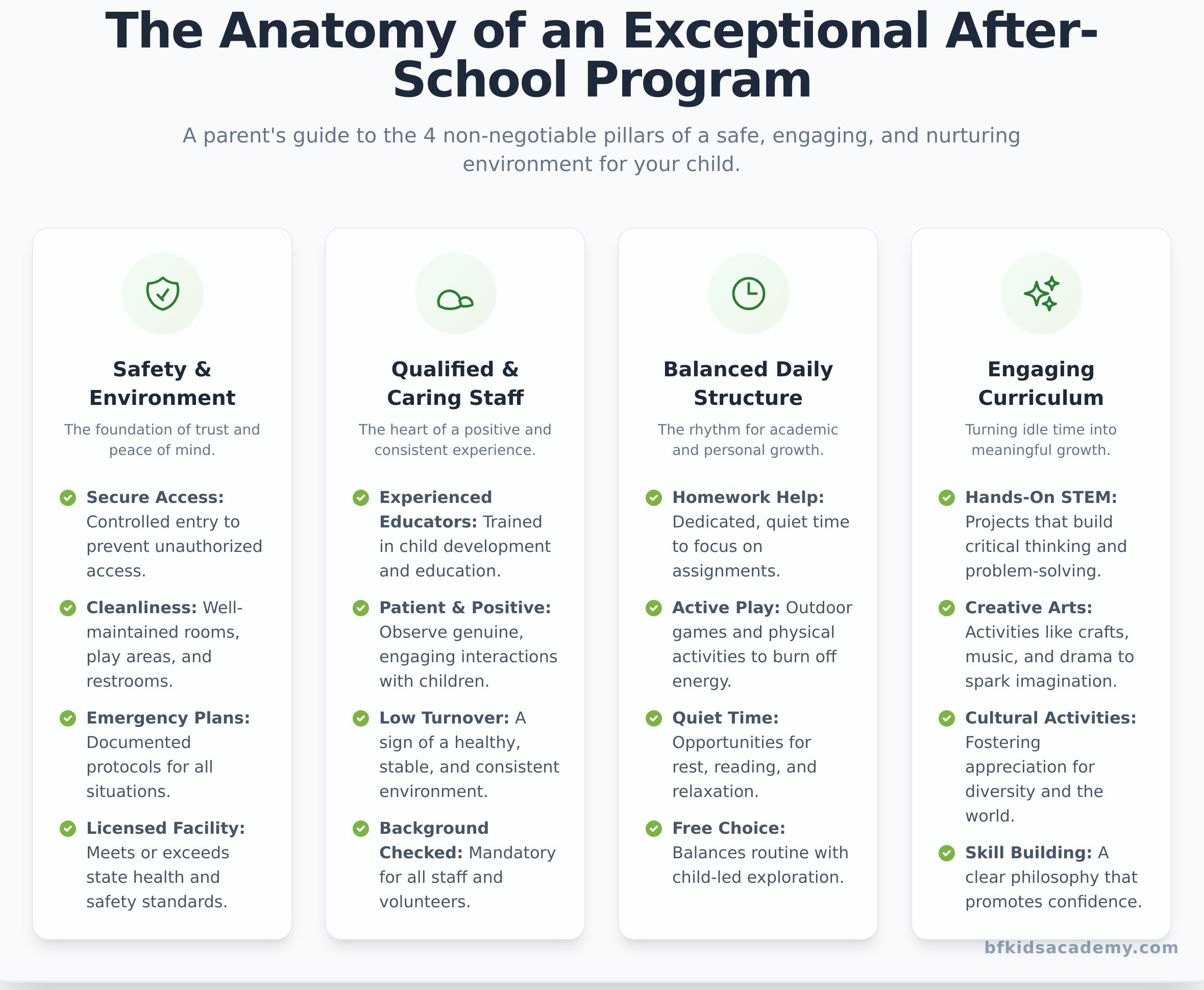
Choosing the right afterschool care program is about more than just finding a place for your child to wait for you. It’s about investing in an environment that fosters their holistic development. To empower you in your search, we’ve created a framework of four non-negotiable pillars. These foundational elements are the bedrock of any exceptional program, ensuring your child is not only safe and supervised but also engaged and inspired to thrive.
Safety, Licensing, and Environment
Your child’s safety is the absolute priority. A licensed facility demonstrates a commitment to meeting state-mandated health and safety standards, including regular inspections and mandatory staff background checks. When you tour a facility, look beyond the surface and pay attention to the details that create a secure and nurturing space.
- Secure Access: Is there a controlled entry system to prevent unauthorized access?
- Cleanliness and Order: Are the rooms, play areas, and restrooms clean and well-maintained?
- Emergency Preparedness: Ask to see their documented emergency plans for fire, medical situations, or natural disasters.
- Staff-to-Child Ratios: Inquire about the specific ratio for your child’s age group to ensure adequate supervision.
Qualified and Caring Staff
The heart of any program is its people. Look for a dedicated team with experience or education in child development. However, credentials alone are not enough. During your visit, observe the interactions between staff and children. Are the educators patient, positive, and genuinely engaged? A low staff turnover rate is often a sign of a healthy work environment, which translates to more consistent and reliable care for your child.
A Balanced Daily Structure
Children thrive on routine, but they also need flexibility. A high-quality program balances structured time with free choice, creating a rhythm that supports both academic growth and creative expression. The daily schedule should thoughtfully blend homework assistance, active play, quiet time for rest, and collaborative projects. Ask how the program accommodates different energy levels and moods, ensuring every child feels supported after a long day at school.
Engaging Activities and an Enriching Curriculum
An afterschool care program should be a space for exploration and discovery, not just passive entertainment. Look for a curriculum that offers a diverse range of enriching activities designed to spark curiosity and build confidence. This includes hands-on STEM projects, creative arts and crafts, outdoor games, and opportunities for cultural appreciation. The best programs are built on a clear educational philosophy that turns after-school hours into a time of meaningful growth.
More Than a Place to Wait: The Developmental Benefits
An exceptional afterschool care program moves beyond simple supervision, becoming a vital environment for holistic development. It’s not just about filling the hours between school and home; it’s about empowering young minds to continue learning, growing, and thriving in a structured yet nurturing setting. This is where children build the academic, social, and emotional skills that will serve them for a lifetime.
Academic Support and Homework Help
One of the most immediate benefits for families is the end of evening homework stress. A dedicated, quiet time for schoolwork ensures assignments are completed without conflict, freeing up your evenings for quality family connection. More importantly, dedicated staff can clarify difficult concepts and help instill strong study habits, transforming homework from a chore into an opportunity for academic growth and building confidence.
Social and Emotional Learning (SEL)
The hours after school provide a unique ‘social laboratory’ where children learn to navigate relationships in a safe, supervised environment. It’s a crucial time for developing the emotional intelligence needed to thrive in a multicultural society. In a supportive program, children are empowered to:
- Practice teamwork and collaboration on group projects and games.
- Learn positive conflict-resolution skills with gentle guidance from caring mentors.
- Build independence and self-assurance away from the immediate family unit.
Creative Expression and Physical Activity
After a day of structured learning, children need an outlet to decompress, move their bodies, and express themselves. A great program provides a balanced mix of enriching activities that nurture both body and mind. This includes dedicated time for active play to promote healthy habits and opportunities for creative exploration through art, music, or drama, allowing each child’s unique personality to shine.
Ultimately, the right afterschool care program is an investment in your child’s bright future. It provides a foundation of support that complements their school day and enriches their overall development. To see how our programs can benefit your child, we invite you to learn more about our approach to shaping the future with care.
How to Choose the Right After-School Program for Your Child
Finding an environment where your child can thrive after the school bell rings is a significant decision. With your research complete, this final step is about making a confident choice. This simple, three-step process will guide you from evaluation to enrollment, ensuring you select the perfect afterschool care program that aligns with your family’s goals and values.
Step 1: Assess Your Family’s Needs
Before you visit any programs, create a clear checklist of your non-negotiables. This grounds your search in what truly matters for your child’s holistic development and your family’s daily rhythm. Consider these key areas:
- Logistics: What are your required hours of care? What is your budget? Is reliable transportation from your child’s school a necessity?
- Your Child’s Personality: Does your child flourish with structured, enriching activities, or do they need more freedom to explore and play creatively? Involving older children in this discussion can empower them and give you valuable insight.
- Your Primary Goal: Are you seeking dedicated academic support and homework help, opportunities for socialization, or simply a safe and fun place for your child to unwind?
Step 2: The Tour and Interview
You can learn a lot from a website, but nothing replaces seeing a program in action. Always schedule a tour when children are present to observe the daily flow and interactions between staff and students. A prepared list of questions will help you gather the essential information you need.
Critical Questions to Ask the Director:
- What is your staff-to-child ratio?
- What qualifications and training do your caregivers have?
- How do you handle conflict resolution between children?
- Can you walk me through a typical daily schedule?
- How do you communicate with parents about their child’s day and progress?
As you listen, observe the atmosphere. Does it feel happy, nurturing, and engaging? The energy of the space speaks volumes. Seeing the environment firsthand is the best way to know if it’s the right fit. See the difference for yourself and schedule a tour of our Granada Hills academy.
Step 3: Trust Your Gut
After the tours and interviews, take a moment to reflect. While logistics and curriculum are important, your parental intuition is a powerful tool. Did the program’s philosophy on child development resonate with your family’s values? Can you genuinely picture your child feeling happy, safe, and empowered in that space? Ultimately, the best afterschool care program is one where you feel a deep sense of trust and your child feels a true sense of belonging.
Empower Your Child’s After-School Hours
Choosing the right afterschool care program is about more than just supervision; it’s about investing in a partnership for your child’s holistic development. The ideal program nurtures their curiosity, supports their academic growth, and provides a safe, engaging environment where they can truly thrive after the school bell rings.
At Bright Future Kids Academy, we are dedicated to being that partner for your family. As a licensed, family-owned center, we provide a unique and enriching trilingual environment (English, Armenian, and Russian) that fosters cultural appreciation and confidence. With dedicated homework assistance and reliable transportation included, we ensure your child receives the support they need to succeed. Discover our enriching after-school program in Granada Hills and give your child the gift of a brighter afternoon-and an even brighter tomorrow.
Frequently Asked Questions About After-School Care Programs
What is the ideal staff-to-child ratio for an after-school program?
While California state licensing sets a maximum ratio of 1 teacher to 14 school-aged children, the ideal ratio ensures every child receives individualized attention. For focused academic support or specialized arts and crafts, a lower ratio is essential for a quality experience. Exceptional programs prioritize safety and quality supervision, maintaining ratios that allow dedicated educators to foster meaningful connections, support holistic development, and help each child truly thrive in a nurturing environment.
How much do after-school care programs typically cost in the Los Angeles area?
The cost of after-school care in the Los Angeles area can vary widely, typically ranging from $400 to over $900 per month. This price often reflects the comprehensive nature of the services offered, including factors like daily transportation, organic meals, and specialized enrichment classes. A high-quality program is an investment in your child’s growth, providing homework support, a low staff-to-child ratio, and a secure, stimulating environment that goes far beyond basic supervision.
What are the benefits of a bilingual after-school program?
Enrolling your child in a bilingual after-school program offers profound benefits for cognitive development and cultural appreciation. Learning a new language enhances problem-solving skills, creativity, and mental flexibility. More importantly, it opens their minds to diverse perspectives, preparing them to thrive in our global community. Children gain not just language fluency but a deeper understanding of different cultures, fostering empathy and building a strong foundation for future academic and professional success.
How do programs handle discipline and conflict resolution between children?
An exceptional program approaches discipline as a teaching opportunity, focusing on positive guidance rather than punishment. Educators help children navigate conflicts by fostering respectful communication and building empathy. They create a safe space for children to express their feelings and work together toward a solution. This empowering method builds crucial social-emotional skills, teaching children to manage disagreements constructively and develop stronger, more positive relationships with their peers.
What should I pack for my child to bring to their after-school program?
To ensure your child has a comfortable and productive afternoon, we recommend packing a few key items. Always include a labeled, reusable water bottle to keep them hydrated. While many programs provide healthy snacks, you may want to pack an extra one your child enjoys. Also, include their homework folder, any necessary textbooks, and a favorite reading book for quiet time. For younger children, a change of clothes is always a wise and practical addition to their backpack.
Are transportation services from school to the program available?
Yes, many high-quality afterschool care programs offer reliable transportation directly from local schools, providing a seamless transition and significant peace of mind for working parents. When inquiring, be sure to ask about their safety protocols, driver background checks, and the types of vehicles used. This essential service ensures your child arrives safely and on time, allowing them to settle in and begin their afternoon of enriching activities without any stress or delay.
How does a licensed daycare’s after-school program differ from one run by a school?
While both provide safe supervision, their focus can differ. School-run programs are convenient and often emphasize homework completion. A licensed daycare’s afterschool care program typically offers a more holistic approach, often with lower staff-to-child ratios and a curriculum designed for enrichment beyond academics, such as language immersion or arts. They also may offer greater flexibility with operating hours and transportation from various schools, all while adhering to rigorous state licensing standards.