


How to Tour a Daycare Center: The Ultimate Checklist for Parents
Choosing the right daycare for your child is one of the most significant decisions you’ll make. The feeling can be overwhelming-you want to find a place that is safe, nurturing, and enriching, but it’s hard to know what to look for. When you tour a daycare center, your mind can race with a dozen thoughts at once, making it easy to forget the most important questions and leave you feeling unsure if you’ve truly seen what matters for your child’s holistic development.
We believe every parent deserves to feel confident and prepared on this journey. That’s why we’ve created the ultimate checklist to empower you. This comprehensive guide is designed to transform your tour from a stressful walkthrough into an insightful investigation. Inside, you’ll find the key questions to ask about safety and curriculum, the subtle environmental cues to observe, and the critical red flags to watch for. You’ll leave each visit with clear, organized notes, ready to make a trust-based decision that ensures your child will be safe, happy, and ready to thrive.
Before You Go: How to Prepare for Your Daycare Tour
A daycare’s website can paint a beautiful picture, but the real story unfolds when you walk through the doors. The opportunity to tour a daycare center is your exclusive chance to see beyond the promises, feel the atmosphere, and observe the interactions that will shape your child’s day. Thoughtful preparation transforms a simple walkthrough into a powerful fact-finding mission, empowering you to make an exceptional choice for your child’s holistic development.
Before you schedule a visit, sit down and define what truly matters to your family. Identify your top three priorities-perhaps it’s a robust safety protocol, a specific learning style like play-based vs. academic, or an enriching bilingual program. Then, create a simple list of your “non-negotiables” and your “nice-to-haves.” This framework will help you stay focused and compare centers effectively.
Researching the Basics Online
A little digital homework provides crucial context and helps you ask more targeted questions when you tour a daycare center. Understanding the different approaches to early education is a vital first step; you can find a comprehensive overview of childcare models online to help clarify these philosophies. Before you tour a daycare center, be sure to:
- Check Their License: Visit your state’s official licensing website to confirm their status is active and to review any public reports or violations. This is a non-negotiable step for ensuring basic safety and compliance.
- Read Reviews: Look at reviews from multiple sources (like Google, Yelp, and local parenting groups), paying close attention to patterns in feedback, both positive and negative.
- Note the Logistics: Confirm that their hours of operation, calendar, and holiday schedule align with your family’s needs.
Scheduling the Tour Effectively
To get a true sense of the daily rhythm, timing is everything. When you call to schedule your appointment to tour a daycare center, don’t be afraid to make specific requests that will give you the clearest picture of the center’s environment. Ask the director if you can tour the daycare center during active hours, such as mid-morning, when children are engaged in learning and play, rather than only during naptime. Inquire about the expected length of the tour to plan your time accordingly, and be sure to ask if you should bring your child along. Seeing their reaction to the space can be incredibly telling.
During the Tour: What to Observe in the Environment
When you tour a daycare center, your senses provide the most immediate and honest feedback. The moment you step inside, take a deep breath. What do you smell? Listen closely. What do you hear? Look around carefully. What do you see? An exceptional early learning environment feels vibrant, clean, and welcoming from the very first impression. This is the space where your child will spend their days, so it must feel like a place where they can feel secure, explore their creativity, and truly thrive.
The goal is to find a space designed with a child’s holistic development in mind. Look beyond the basics to see if the environment is not just safe, but also enriching and empowering. A well-organized, joyful atmosphere is a clear sign of a dedicated and professional staff committed to shaping the future with care.
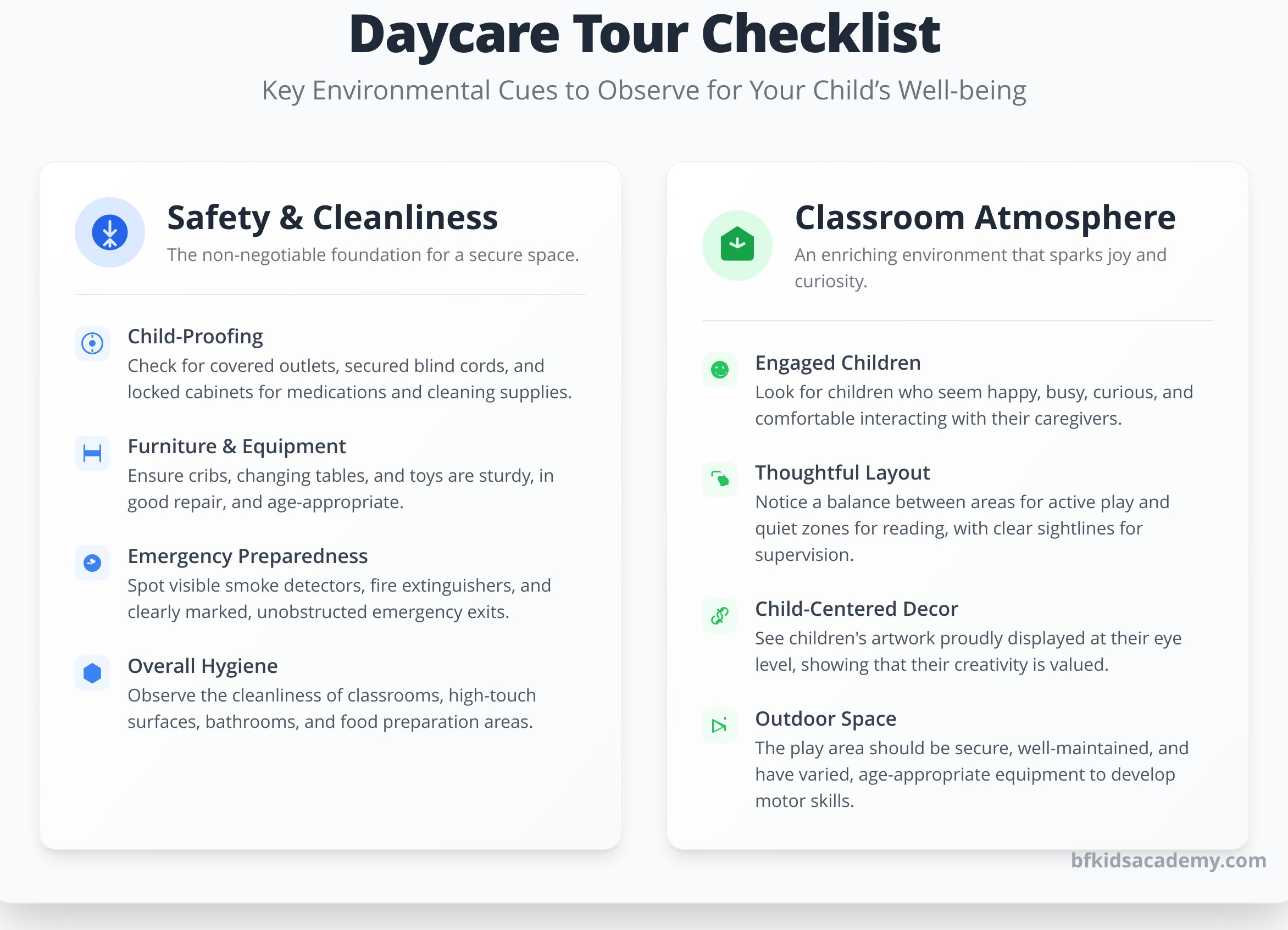
Safety and Cleanliness Checklist
A safe, nurturing environment is non-negotiable. As you walk through the facility, keep a sharp eye out for these fundamental safety and hygiene standards:
- Child-Proofing: Are electrical outlets covered? Are cords and blinds secured and out of reach? Is cleaning equipment and medication stored in locked cabinets?
- Furniture and Equipment: Is all furniture, especially cribs and changing tables, sturdy, in good repair, and age-appropriate?
- Emergency Preparedness: Can you easily spot smoke detectors, fire extinguishers, and clearly marked emergency exits?
- Overall Hygiene: Pay close attention to the cleanliness of classrooms, high-touch surfaces, bathrooms, and food preparation or eating areas.
Classroom Atmosphere and Layout
A classroom should be a hub of happy, purposeful activity. Observe how the space is used to foster engagement, confidence, and a love of learning. Here’s what to look for:
- Engaged Children: Do the children seem happy, busy, and comfortable with their caregivers? Look for positive interactions and signs of curiosity.
- Thoughtful Layout: Is there a good balance between areas for active play and quiet activities like reading or puzzles? Does the layout allow for easy supervision?
- Child-Centered Decor: Is children’s artwork proudly displayed at their eye level? This shows that their creativity is valued.
- Outdoor Space: The outdoor play area should be secure, well-maintained, and equipped with a variety of age-appropriate structures that encourage gross motor skill development.
During the Tour: Observing the Staff and Children
As you walk through the facility and review the curriculum, remember that the most critical aspect of any childcare environment is the human element. The quality of interactions between staff and children is the single greatest indicator of a high-quality program. When you tour a daycare center, shift your focus to the atmosphere and the relationships you see unfolding. This is the environment where your child’s emotional intelligence and social skills will take root and blossom.
A truly exceptional center is built on a foundation of respect, warmth, and encouragement. Pay close attention to the daily dynamics to see if the center’s philosophy is truly put into practice, creating a space where children can thrive.
Teacher-Child Interactions
The connection between a teacher and a child is fundamental to their learning and sense of security. A dedicated educator does more than supervise; they guide, nurture, and inspire. Look for clear signs of positive and empowering relationships:
- Respectful Communication: Do teachers get down on the children’s level to speak with them eye-to-eye? Is their tone of voice consistently warm, patient, and positive, even during redirection?
- Positive Guidance: How do they handle conflict or challenging behavior? Look for staff who use redirection and teach problem-solving skills rather than resorting to punitive measures.
- Genuine Engagement: Do the teachers seem genuinely happy and passionate about their work? An engaged and joyful educator creates an environment where children feel excited to learn and participate.
Peer Interactions and Group Dynamics
Observe how the children interact with each other. A well-managed classroom fosters a sense of community, teaching valuable social skills like empathy, cooperation, and sharing. As you continue your tour, notice the group dynamics:
- Collaborative Play: Do children generally seem happy and comfortable with one another? Look for instances of sharing, taking turns, and working together on activities.
- Manageable Ratios: Does the group size seem appropriate for the number of teachers present? Staff should be able to provide individual attention without seeming overwhelmed.
- Balanced Activities: Does the daily schedule allow for a healthy mix of structured group activities and opportunities for independent, child-led play? This balance is key to holistic development.
The Ultimate List of Questions to Ask the Daycare Director
When you tour a daycare center, the conversation with the director is your most valuable tool for understanding the heart of the program. A dedicated director will welcome your questions, seeing them as a sign of an engaged and caring parent. This is your chance to look beyond the physical space and understand the core philosophy, policies, and values that will shape your child’s daily experience. To keep the conversation focused and productive, we recommend grouping your questions by topic. Be sure to take notes so you can thoughtfully compare different centers later.
Questions About Staffing and Training
The quality of the educators is paramount to your child’s well-being and development. These questions help you understand the team entrusted with their care.
- What are the teacher-to-child ratios for each age group?
- What qualifications, degrees, and ongoing training are required for your teachers?
- Can you share your staff turnover rate? How long have most lead teachers been part of your team?
- Are all staff members required to pass comprehensive background checks and maintain current CPR/First Aid certification?
Questions About Curriculum and Daily Routine
A structured yet flexible routine helps children thrive. Inquire about their approach to learning to ensure it aligns with your family’s values and your child’s needs.
- Could you walk me through a typical daily schedule for my child’s age group?
- What is your educational philosophy (e.g., play-based, Reggio Emilia, academic-focused) and how does it support holistic development?
- How do you integrate enriching activities like art, music, and language into the day?
- What is your approach to guiding children through behavioral challenges and fostering positive social skills?
Questions About Health, Safety, and Nutrition
A safe and healthy environment is non-negotiable. These questions address the critical procedures that protect every child.
- What is your policy regarding sick children and when they can return to school?
- How do you manage and communicate food allergies or dietary restrictions?
- Please describe your security measures for drop-off, pick-up, and visitor access.
- Do you provide meals and snacks? If so, can you share a sample menu? Are organic options available?
Questions About Communication and Parent Involvement
A strong partnership between parents and the center is key to a child’s success. Understanding how you’ll stay connected is essential.
- What tools do you use for daily communication with parents (e.g., a mobile app, daily reports)?
- How often are formal parent-teacher conferences held to discuss my child’s progress?
- What is your policy for parents who wish to visit or observe during the day?
- Are there opportunities for families to get involved in school events and build community?
After the Tour: Reflecting and Making Your Final Decision
After you tour a daycare center, the crucial step of reflection begins. This decision is about more than just logistics; it’s about finding a dedicated partner in your child’s holistic development and entrusting a team with their well-being. Take a quiet moment to process everything you saw and heard, from the curriculum in action to the tone of the caregivers. Compare your detailed observations against your family’s core values and priorities. And most importantly, trust your intuition. That gut feeling is a powerful indicator of your comfort and confidence in their environment.
Organizing Your Notes
To make a clear and objective comparison, it’s essential to organize your thoughts while the experience is still fresh in your mind. A structured approach ensures no detail is overlooked and helps you evaluate each option fairly. We recommend the following steps:
- Review Immediately: While driving home or over a cup of coffee, look over your checklist and notes. Add any immediate impressions you had about the atmosphere, the children’s engagement, and the staff’s demeanor.
- Create a Pros and Cons List: For each center, create a simple two-column list. This visual comparison can quickly highlight which facility best aligns with your needs for everything from meal plans to educational philosophy.
- Rank by Non-Negotiables: Revisit your initial list of “must-haves.” Which center excelled in the areas that matter most to your family?
Making the Call
Choosing the right daycare is a significant family decision. Discuss your impressions openly with your partner or co-parent, ensuring you are both aligned and feel positive about the path forward. Never hesitate to call the director with follow-up questions that may have come up after your tour. A professional and caring team will welcome your diligence. Once you’ve identified the right fit-an exceptional environment where you know your child will thrive-it’s time to inquire about the enrollment process and any potential waitlists. Securing this trusted partnership is the ultimate goal of your search.
Ready to see a nurturing, trilingual environment dedicated to empowering young minds? Schedule your tour at Bright Future Kids Academy today!
Empowering Your Choice: Finding the Perfect Childcare Fit
Choosing the right daycare is a significant decision, and you are now fully equipped to make it with confidence. Remember, a successful visit is about more than a list of questions-it’s about observing the environment, feeling the warmth of the staff, and trusting your parental intuition. This guide empowers you to identify a truly nurturing setting where your child will not just be cared for, but will truly thrive.
As you prepare to tour daycare center options, we invite you to experience a place where holistic development and cultural enrichment meet. Bright Future Kids Academy is a licensed, family-owned center dedicated to shaping the future with care. We provide daily organic, healthy meals and foster global appreciation with our unique trilingual program in English, Armenian, and Russian. See for yourself what makes our community special.
Schedule your personalized tour of Bright Future Kids Academy today! We are excited to show you the perfect place for your child to learn, grow, and begin their journey toward a brighter tomorrow.
Frequently Asked Questions About Daycare Tours
What is the best time of day to tour a daycare center?
The ideal time to tour a daycare center is mid-morning, typically between 9:30 AM and 11:00 AM. This allows you to observe the core learning part of the day, where children are engaged in structured activities, circle time, or free play. Visiting during this window helps you avoid the hectic drop-off and pick-up times or the quiet of naptime, giving you the most authentic snapshot of the daily routine, teacher interactions, and overall atmosphere.
Should I bring my child with me on the daycare tour?
For your initial, in-depth tour, it is often best to go by yourself. This ensures you can focus completely on observing the environment, asking detailed questions, and having a candid conversation with the director without distractions. Once you have narrowed your choices down to your top two or three centers, you can then schedule a second, shorter visit to bring your child along so they can experience the space and meet the teachers firsthand.
What are some major red flags I should watch out for during a tour?
Major red flags to watch for when you tour a daycare center include a chaotic, disorganized, or excessively loud environment and a lack of cleanliness. Pay attention to the children-are they generally engaged and happy, or are many left crying without being comforted? Unhappy, stressed, or dismissive staff are also a significant concern. A quality center should feel secure, welcoming, and transparent, with attentive caregivers who are happy to answer all your questions.
How can I tell if the teachers are genuinely happy and not just ‘putting on a show’?
Observe how educators interact with children when they are not speaking directly to you. Do they get down on the child’s level, make eye contact, and speak in a warm, respectful tone? Listen for the sound of genuine laughter and positive, encouraging language. A truly dedicated teacher’s passion shines through in their patient, nurturing interactions and the trusting, joyful responses they receive from the children. Authentic connection is visible and feels different from simple supervision.
Is it okay to ask about staff turnover rates?
Absolutely. Asking about staff turnover is a critical and completely appropriate question that provides insight into the center’s work environment. A low turnover rate is a positive sign, suggesting that staff are happy, supported, and dedicated. This stability is essential for children to form secure attachments with their caregivers. A high turnover rate, on the other hand, could indicate underlying issues with management or morale that may impact your child’s experience and holistic development.
How do I compare a family-owned daycare to a larger corporate chain?
Family-owned centers often provide a more intimate, home-like atmosphere with direct communication with the owner. Corporate chains may offer a more standardized curriculum, larger facilities, and more structured policies. During your tour, consider which environment best fits your family’s values. Ask about curriculum flexibility, communication protocols, and how they foster a sense of community to determine which model will best empower your child to thrive and grow with confidence.